


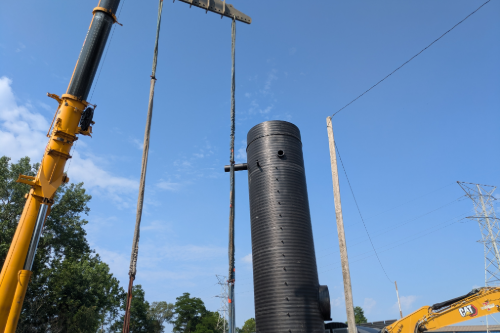
When engineers begin evaluating a pump station project, one of the first questions is often whether a packaged pump station can handle the required flow. The answer is typically “yes,” but the sizing conversation extends far beyond the gallons per minute the station can handle.
There is no single maximum size or capacity, as factors such as wet well dimensions, site conditions, pump configuration, transportation and installation can all influence the final design.
Though packaged pump stations are commonly associated with smaller projects, modern prefabricated systems with HDPE or fiberglass wet wells are increasingly common due to the benefits and site risk reduction they offer. These advantages make them a viable solution for projects ranging from small developments to high-capacity pump stations. Excel Fluid Group, for example, has delivered packaged wastewater pump stations reaching flows of over 7,000 GPM, including the Logansport project with pumps rated at 7,350 GPM.
Understanding how pump stations are classified, what factors dictate prepackaged system sizing, and where limitations arise can help ensure the correct approach is taken from the start.
What is a Packaged Pump Station?
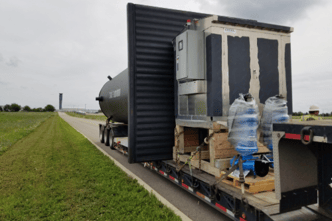 Before discussing sizing, it’s important to define what makes a pump station “packaged.”
Packaged pump stations are prefabricated pumping systems that are delivered with most of their primary components already engineered and assembled. Instead of sourcing pumps, controls, and other parts from multiple vendors, these components are built and tested under one roof and designed to work together as a singular, complete system. This approach can help save time and money as stations arrive prefabricated and factory tested. For a more detailed comparison, read our full "Prepackaged vs Field-Assembled Cost" blog here.
Just as each project will require its own unique solution, each packaged station will have its own configuration. Prepackaged solutions are not a one-size-fits-all product. Despite the variance, packaged systems help simplify procurement by providing buyers with a single point of accountability for the overall solution.
How Are Packaged Pump Stations Sized?
Flow rate, typically measured in gallons per minute (GPM), is one of the starting points when determining the required size and capacity of a packaged pump station, but it is not the only consideration. Total Dynamic Head (TDH) and force main characteristics also help determine the pumping performance required, while the number and configuration of pumps will depend on the application and required redundancy.
Wet well diameter, depth and storage requirements are influenced by factors such as incoming flows, site elevations and available space. Site and groundwater conditions can further affect the required wet well design and material. Transportation and installation must also be considered, particularly for larger stations, as the size and weight of prefabricated components can affect how they are transported, lifted and installed on-site.
Pump Station Size Classifications
The Submersible Wastewater Pump Association (SWPA) classifies lift stations according to flow rate in its Submersible Sewage Pumping Systems Handbook:
| Classification | Flow |
| Very Small | Less than 80 GPM |
| Small | 80 to 300 GPM |
| Medium | 300 to 3,000 GPM |
| Large | Greater than 3,000 GPM |
While these categories may provide a useful reference, they don’t fully define the capabilities of today's packaged systems. Many engineers tend to associate packaged stations with smaller applications, though advances in materials, tech, and transportation have all allowed for larger sizes of prefabricated solutions to be created and delivered. Excel Fluid Group's experience extends well beyond the 3,000 GPM threshold for a "large" station, with packaged wastewater pump stations reaching flows of over 7,000 GPM.
How Large Can Excel Packaged Pump Stations Be?
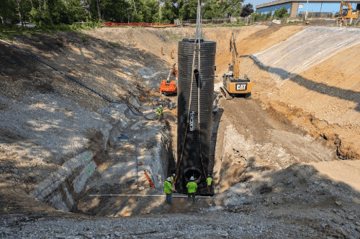 Packaged pump stations have long been viewed as a solution for smaller applications, but Excel Fluid Group’s real-world projects continue to challenge that assumption. Excel has delivered packaged wastewater pump stations reaching flows of over 7,000 GPM, with wet well diameters approaching 11 feet and depths of up to 45 feet. For an example of a prefabricated pump station that reached many of these factors, look to our Logansport pump station case study. This project contained two large, prefabricated HDPE wet wells that, together, are rated at 7,350 GPM. Each HDPE wet well measured 10 feet in diameter and 45 feet deep, demonstrating the scale that can be achieved with a prefabricated solution. Extending beyond what SWPA classifies as a “large” station, the Logansport project is one of the clearest examples of how far prepackaged systems can be scaled. Beyond the high capacity of the pumps, the Logansport station also reworked what was originally a cast-in-place concrete design into an HDPE solution that was far more cost-effective and faster to install.
There is no single universal maximum size or capacity for a packaged pump station. Instead, the practical limits of each project depend on its engineering requirements, site and structural conditions, as well as the transportation and installation requirements of the completed system.
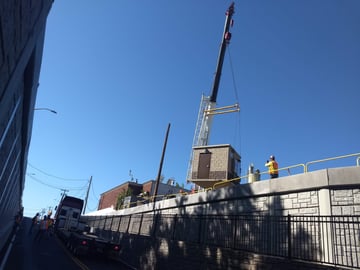
Pictured is the Urban Ave site, another part of the Long Island Railroad project. This example showcases a packaged enclosure being moved and installed on-site. |
For additional cases that display the capabilities of pump stations in stormwater applications, Excel’s Long Island Railroad project provides a strong example. With the New Hyde Park Rd. site in particular, Excel was able to provide a turn-key controls building with pumps rated at 3,300 GPM to handle stormwater. This project illustrates how packaged systems can be applied to complex, large-scale public infrastructure projects while reducing field installation requirements.
Excel has also shipped out packaged water booster stations for large-scale projects, such as the Andrews Air Force Base Water Booster Station. The Andrews project serves as another example of how packaged systems can be used for complex infrastructure applications outside of traditional wastewater pumping. Together, these projects demonstrate that modern packaged systems can support a wide range of applications, including projects that have traditionally relied on field-built solutions.
What Factors Determine Packaged Pump Station Size?
At first glance, prefabricated pump stations might seem like the ideal solution for every project. In practice, however, several factors add constraints that make a prepackaged approach more difficult to execute.
Required flow and pump capacity help determine the size and configuration of a packaged pump station, alongside factors such as wet well dimensions, site conditions and available space. Practical considerations can also place limits on what is possible.
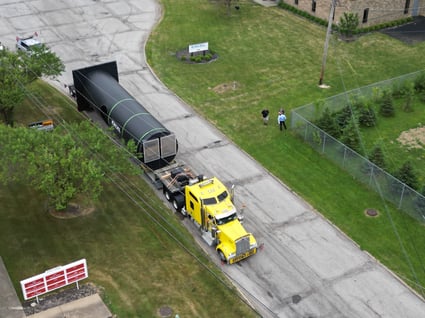
One of the primary limitations of prepackaged systems is transportation. Larger stations can often present challenges due to their weight or size in relation to roadway restrictions. Concrete wet wells, for example, must be shipped out in “rings” that are later assembled and sealed in the field due to their weight. Lengths and diameters of wet wells can also make it near-impossible to ship out entire stations on trucks or similar road transportation. In general, an 11-foot diameter is the limit for wet wells, while integrated structures must have a diameter of 6 feet or less.
Wet well depth can also pose a challenge. Deeper structures will be subjected to different conditions as the wells reach further layers of the ground. This means that some stations will have to accommodate groundwater conditions, buoyancy, and additional installation requirements while also determining the best material for the application.
Can Large Pump Stations Still Be Considered "Packaged"?
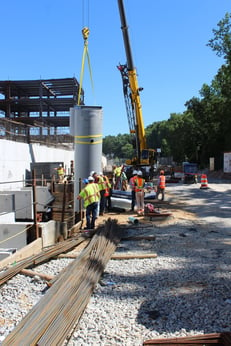 As packaged pump stations increase in size, it is reasonable to assume that some of the advantages associated with prefabricated systems may change, though larger stations can still be delivered with most of their components engineered, assembled, and tested prior to their arrival at a site.
Depending on project requirements, key components such as wet wells, pumps, controls, enclosures, and generators may all be provided as part of a complete station package. While final connections and parts of installation may still occur on-location, assembly and testing have been performed as much as possible in advance. This allows larger packaged projects to retain many of the same benefits as their smaller counterparts, helping simplify installation even for larger and more complex applications.
Sizing and Budget Planning
As demonstrated throughout this blog, there’s much more to packaged pump stations than flow rate. The same factors that determine the final station’s size and configuration also directly influence each project’s overall cost, with notable differences between packaged and field installed pricing. Because of this relationship, budgeting typically begins very early on in the planning process, allowing engineers to compare alternatives, evaluate design options, and establish realistic expectations for the scope of the project.
For projects that fall within its supported range (currently duplex designs of up to 1,563 GPM), Excel’s Pump Station Budget Calculator can provide a preliminary budget estimate using project-specific info such as flow requirements, application type/industry, Total Dynamic Head (TDH), and more. For a more in-depth look into pump station cost without the need to input project details, our “What Affects Your Pump Station’s Cost?” blog is available.
Modern packaged solutions are no longer limited to small applications. With the right preparation and design considerations, prepackaged solutions can extend well into the SWPA-defined “large stations” category while still providing many of the benefits associated with prefabricated construction.
Frequently Asked Questions
What is the maximum size of a packaged pump station?
There is no single universal maximum size for a packaged pump station. Its practical size and capacity depend on factors including flow requirements, wet well dimensions, site conditions, structural requirements, transportation and installation.
How many GPM can a packaged pump station handle?
Capacity depends on the requirements and design of the individual project. Excel Fluid Group has delivered packaged wastewater pump stations exceeding 7,000 GPM, including the Logansport project with pumps rated at 7,350 GPM.
What factors determine packaged pump station size?
Key factors include flow rate and pump capacity, Total Dynamic Head (TDH), wet well diameter and depth, storage requirements, force main characteristics, site conditions and elevations, available space, pump configuration, transportation and installation.
Can a large wastewater pump station be prefabricated?
Yes. Large wastewater pump stations can be supplied as packaged systems, with many of their primary components engineered, assembled and tested before arriving on-site. Some final connections and installation may still need to take place in the field.
How deep can a packaged pump station wet well be?
Wet well depth depends on the application, site and groundwater conditions, required storage, incoming elevations and the material used. Deeper wet wells may also require additional consideration of groundwater, buoyancy and installation requirements.
What is the difference between a packaged and field-assembled pump station?
A packaged pump station is supplied with most of its primary components already engineered, assembled and tested before delivery. A field-assembled pump station requires more of its individual components to be sourced, integrated and assembled at the project site.