


Federal funding can make water infrastructure and pump station projects possible, but it can also introduce requirements around materials, sourcing and documentation. With legislation such as the Build America Buy America Act and American Iron & Steel in place, compliance isn’t simply a box to check at the end of a project.
Because water and wastewater infrastructure projects often rely on federal funding, domestic sourcing requirements are a common part of pump station planning and delivery.
Defining the Main Compliance Requirements
There are three main federal compliance requirements that appear within the sphere of pump station design, each with varying relevance. Generally, the Build America, Buy America Act (BABA) is the most common, followed by American Iron & Steel (AIS) and The Buy American Act (BAA). There are also some state-specific requirements that contain stipulations that must be considered. While these requirements are distinct, overlap can occur depending on project funding and location. Most commonly, BABA and AIS are known to appear on water and wastewater projects together. In contrast, BAA applies in much narrower circumstances and rarely overlaps with the others. State requirements—such as the Pennsylvania Steel Products Procurement Act—are of course geographically specific and applied only to certain projects within each state.
What Is the Build America Buy America Act?
 The primary legislation that governs projects assisted by federal funding is the Build America, Buy America Act, commonly known as BABA. This act was signed by former President Joe Biden in November of 2021 as part of the Infrastructure Investment and Jobs Act. The overarching act was put in place to improve public safety while creating more jobs throughout the nation. BABA aimed to strengthen U.S. manufacturing, reduce reliance on foreign supply chains, and ensure that taxpayer-funded infrastructure investments directly supported the U.S., among other things. Water systems, including wastewater, drinking water, and pumping systems, are all included under the specified scope of infrastructure for this act.
When federal funding is involved in a water infrastructure project, BABA typically applies. The general rules require that all materials used in federally funded infrastructure projects be produced in the United States, with manufactured products meeting minimum domestic content requirements. For manufactured products, 55% of total component costs must be domestic, though waivers are allowed in specific instances. Some of the more common circumstances in which waivers are granted include situations where certain materials are unavailable or unreasonably priced in the United States. Waivers may also be issued when applying BABA would be contrary to the public interest.
From pumps to fasteners, all sorts of construction materials are involved in the creation of pump stations. This makes documentation and sourcing transparency extremely important in ensuring compliance. Documentation typically is received in the form of a physical sheet or form that comes alongside a component. In order to streamline documentation and verification, Excel works primarily with manufacturers such as Barnes (pumps), Milliken (valves), and TOPP (wet wells), all of which offer products that can be manufactured to comply with BABA requirements.
What Are American Iron & Steel (AIS) Requirements?
 In January of 2014, the American Iron & Steel Act was passed through the Consolidated Appropriations Act. AIS requires that iron and steel products used in covered water infrastructure must be produced in the United States and have all manufacturing processes occur domestically. It is worth noting that this does not apply to equipment used during construction that doesn’t become a part of the finished system, such as temporary framework.
Essentially, AIS is a long-standing requirement for water projects that BABA expanded upon when it was signed. The EPA tends to enforce both acts together whenever applicable. There are some applications where AIS will apply and BABA does not, and these are typically connected with State Revolving Funds (SRFs). SRFs are EPA-backed, state-run programs that provide low-interest loans for water infrastructure. The EPA has also explicitly stated that AIS remains independently applicable to certain water infrastructure projects and that Build America, Buy America does not always apply in situations where AIS does (Source: Build America, Buy America Act (BABA) | US EPA).
What Is the Buy American Act?
 The Buy American Act is perhaps the most specific of the group. Made official legislature in 1933, the BAA applies only when the United States federal government itself is purchasing goods and/or construction materials over a micro-purchase threshold ($15,000 as of October 2025). This act doesn’t all-out ban purchases from foreign countries, but it does establish a price preference for domestic products. This is the main rule that distinguishes BAA from AIS and BABA. Foreign goods may still be used if they remain cost-competitive or fall under other exceptions like non-availability, trade agreements, or public interest, much like BABA.
What Are Pennsylvania Iron & Steel Requirements?
 For an example of a state-specific iron and steel domestic sourcing requirement, we can look to the Pennsylvania Iron & Steel Act, formally known as the Pennsylvania Steel Products Procurement Act. Enacted in March of 1978, this act predates both BABA and AIS and requires that iron and steel products used on public works in PA must be melted and manufactured in the United States. Compliance is again demonstrated through manufacturer certifications, and exceptions can be made in the case of the 75% rule, which states that a product with mixed-origin steel will still qualify as compliant if 75% or more of the cost for the steel is U.S.-sourced. This requirement is particularly relevant for pump station projects funded through state programs such as PennDOT and PENNVEST, which layer state‑level sourcing rules on top of federal requirements like AIS and BABA.
Real-World Pump Station Compliance Challenges
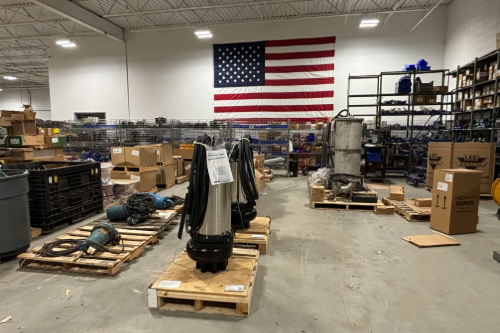
As a manufacturer of pre-packaged pump stations, Excel Fluid Group (EFG) aims to evaluate Build America, Buy America requirements at a larger scale, as opposed to as a collection of smaller parts. Under BABA guidelines, a pump station delivered specifically as a singular manufactured product should be evaluated based on the total domestic content of the system instead of requiring every minor component to meet sourcing rules.
In real-life applications, this distinction is not always immediately understood during project review. EFG has encountered situations in which questions were raised about compliance due to conflicting views of component breakdowns. In cases like this, EFG has been able to successfully demonstrate compliance through documentation that clarifies that 55% of the total cost of the packaged station consists of domestically sourced products. This experience reinforces the importance of sourcing components directly from manufacturers that already produce BABA-compliant products when possible. Doing so prevents unnecessary delays and keeps projects moving along steadily.
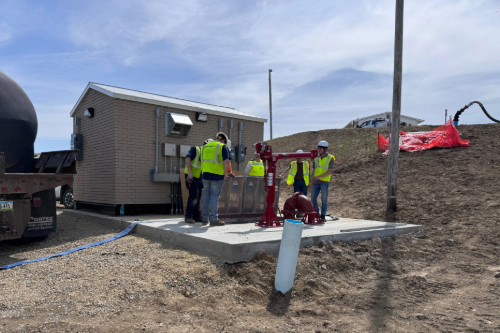
In addition to these considerations, Excel also regularly works within American Iron & Steel requirements as a part of pump station project execution. Because packaged pump stations incorporate numerous iron and steel components that are permanently integrated into public water infrastructure, AIS compliance is a daily consideration and not just an occasional exception. Most applicable components are sourced and documented to meet AIS requirements, though this regulation does allow a "de minimis" exception for small-scale iron or steel components that do not significantly impact system performance. When this exception is likely to apply, these items are reviewed to ensure they fall within the accepted parameters and are documented for compliance.
Compliance Considerations for Pump Station Projects
The world of compliance and water infrastructure is vast, but clarity around common requirements can help simplify project delivery. While final compliance determinations ultimately rest with the funding agency or project owner, recognizing how these guidelines may align or diverge in different cases allows project teams to better anticipate documentation needs and keep processes steady when executing federal or state-funded water projects. For more details on requirements in other aspects of pump station system creation, take a look at our informational blog section. To contact Excel Fluid Group directly with inquiries, we can be reached here.
Frequently Asked Questions
Does Build America Buy America apply to pump station projects?
Build America Buy America requirements can apply when pump station projects receive federal financial assistance. Applicability depends on the funding source, project scope and final determination by the funding agency or project owner.
Can BABA and AIS apply to the same project?
Yes. BABA and American Iron & Steel requirements can both appear on water and wastewater infrastructure projects, depending on how the project is funded and what requirements apply.
Why is documentation important for BABA and AIS compliance?
Documentation helps show how applicable materials, components or manufactured products meet relevant domestic sourcing requirements. For packaged pump stations, this can help clarify how the system is evaluated during project review.
How does Excel Fluid Group support compliance on pump station projects?
Excel Fluid Group works with manufacturers that can provide products designed to meet BABA and AIS requirements where applicable, helping project teams manage sourcing documentation and reduce avoidable delays.