


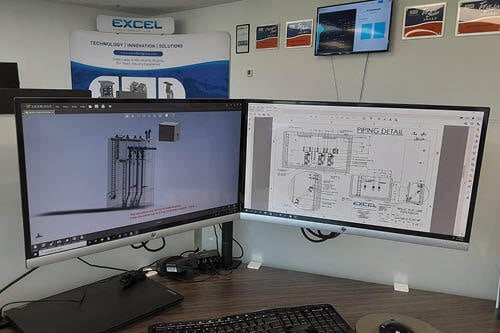
Design Assist Pump Station Program
Pump station design can involve a range of technical considerations, from flow requirements and hydraulic calculations to wet well sizing and structural requirements. Depending on the project, engineers may need additional pump station expertise during the design phase to work through these requirements.
EFG’s Design Assist Program was made for engineers and project managers who have a pump station as a part of their next project and may need engineering expertise to inform, support, and guide pump station projects during the design phase. It's here to support the Civil Engineer of Record with pump station specific calculations, packaged system documentation, counter buoyancy calculations, specifications, permit ready deliverables, and more as required.
The program is divided into three levels: Standard, P.E. Qualified, and P.E. Certified. Which level contractors or engineers pursue depends on the depth of their personal expertise and how comfortable they feel specifying a pump station performing tasks without guidance from a pump station design phase partner.
What Does Pump Station Design Involve?
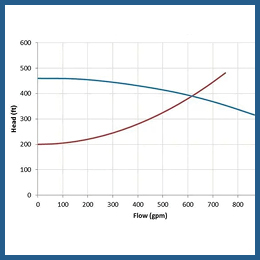
Pump station design begins with understanding the hydraulic requirements of the project. Required flow rate and Total Dynamic Head (TDH) help inform pump selection, while hydraulic calculations and system curves are used to evaluate how the pumps will perform within the system.
Wet well sizing must also account for factors such as storage requirements, incoming flows and pump operation. Depending on the project, the design process may also require equipment and 3D drawings, electrical requirements, structural and buoyancy calculations, specifications and permitting documentation.
The level of pump station engineering required will vary from project to project, which is why some teams can work from standard design resources while others require project-specific calculations, drawings and professional engineering review.
What Level of Pump Station Design Support Do You Need?
For teams that need engineering support on an upcoming pump station project, it’s important to determine how much help is actually needed. EFG’s Design Assist Program breaks that down in more detail. Here’s what project managers and engineers should know about each level of the program.
| Feature |
Level 1: Standard |
Level 2: P.E. Qualified | Level 3: P.E. Certified |
| Standard Pump Station Design Resources | ✓ | ✓ | ✓ |
| Hydraulic Calculations | ✓ | ✓ | ✓ |
| 3rd Party P.E. Stamped | - | ✓ | ✓ |
| Project Specific Design Report and Drawing | - | ✓ | ✓ |
| Permit to Install (PTI) Assistance | - | ✓ | ✓ |
| Electrical Design Support | - | - | ✓ |
| Buoyancy and Structural Calculations | - | - | ✓ |
| Finite Element Analysis (FEA) report | - | - | ✓ |
| Virtual Meetings | As Needed | 3 | Up to 8 |
| In-Person Meetings | - | 1 | Up to 5 |
 Level 1: Standard Level
All of EFG’s project partners have access to standard level resources at no additional cost. Mike Coleman, P.E. and project engineer for EFG, says that basic, short-term projects are usually the best fit for Level 1 assistance.
“Level 1 is really our standard, package pump station solution,” Coleman says. “It could be a fiberglass wet well or something relatively simple.”
Through their Resource Library, EFG can provide standard, prototype drawings that contain important project information, wet well design calculations, specifications, and more. Coleman, or another engineer on the EFG team, can also provide size measurements and other important information needed for the pump station project.
“Using the wet well calculator or my own calculations, I’ll provide the flow rate, the system curve, and other information they might need,” he explains. “Then, I’ll give them case studies that are similar in size or location.”
Level 1 resources are available free of charge but are intended for conceptual planning and budget development. They are not project-specific engineering documents, are not sealed by a professional engineer, and must be reviewed, adapted, and formally incorporated by the project’s Engineer of Record. These standard tools provide a strong starting point for understanding pump station design options and cost implications, but some projects require more detailed, project-specific engineering support. In those cases, EFG’s Design Assist Program is structured to scale, offering higher levels of technical involvement and professional oversight as project complexity and risk increase.
 Level 2: P.E. Qualified
Level 2 delves into project-specific information that provide certified reports explaining sizing selections and hydraulic calculations in detail. Typically costing between 3-5% of an overall pump station project's cost, it provide that extra level or project specific pump station documentation. Working with a neutral third-party engineer, they're able to collaborate to ensure the project meets the requirements of the design.
“I’m an engineer, but I can’t stamp for everything,” Coleman explains. “I can calculate buoyancy and do hydraulic calculations if necessary, but I can’t stamp for electrical, structural, or other disciplines.”
EFG works with third-party engineers throughout the country, chosen based on project location and expertise. One of those third-party engineers is Kenny Day P.E., the founding member and principal engineer for 12 Point Consulting.
“Mike will create the design, with our input, based on the requirements of the project then generate the report,” Day says. “I’ll then review the documentation, design work, and calculations because it’s my stamp and I’m ultimately responsible for the design.”
The further layer of review helps provide that extra peace of mind for the contractor or engineer. Our extended team of pump station experts know what pump stations need. For example, if a pump station is a certain size, the contractor or engineer may need a permit to install and complete the report. If any stakeholders have specific questions to ask EFG or an engineer, Level 2 projects come with three virtual design meetings and one on-site meeting.
Additionally, EFG will provide the engineer of record a credit from your Level 3 investment towards their next pump station. Projects that fall in the Level 2 tier traditionally aren’t as complex as those in Level 3. However, when a project or its stakeholders require that extra layer of assurance, its there to provide the stamped hydraulic analysis with sizing selections, and a qualified engineer of record.
 Level 3: P.E. Certified
The amount of engineering support a contractor needs often depends on the complexity of their project, and Level 3 projects can become complicated quickly. Traditionally costing between 6-10% of the pump station project's total, Level 3 is the premium risk-reduction solution.
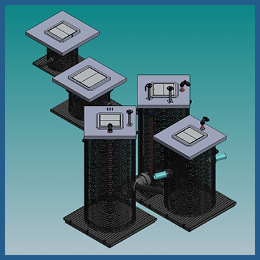
In addition to leveraging the firm's expertise in buoyancy and structure, EFG will bring in more engineers to look at other elements in a pump station project. Control panel layouts, bill of materials (BOM), and wiring schematics are all produced by an in-house electrical engineer.
“We’re doing buoyancy calculations, structural calculations, or even structural finite element analysis,” Coleman says. “Another third-party engineering firm assists, reviews, and stamps the electrical parts of the project.”
Project managers who go the Level 3 route can schedule up to eight virtual meetings and five in-person meetings to ensure their project is on track.
“We don’t want pump stations collapsing in on themselves or popping out of the ground,” Day explains. “Those are the two critical things we look for surrounding buoyancy and structure to ensure the station is viable for the project conditions."
Similar to Level 2, EFG will provide the engineer of record a credit from your Level 3 investment towards their next pump station. From taking a project from design, through manufacturing, and delivery, EFG is moving from a manufacturer and quote provider, to a trusted design-phase partner with the ability to help engineers define scope, reduce uncertainty, and support permitting before the project is bid.
When is Pump Station Design Assistance Useful?
Not every project requires the same level of pump station design support. Standard resources may be sufficient for relatively straightforward applications, while more complex or project-specific requirements can benefit from additional engineering assistance.
Design assistance may be useful when a project team has limited pump station design experience or requires project-specific calculations, drawings, specifications or additional engineering support.
The level of support required will depend on the project, but the Engineer of Record continues to retain responsibility for the overall site and civil design. Excel Fluid’s role is to provide specialist pump station engineering support where it is needed rather than replace the Engineer of Record.
EFG: Here to Assist Engineers
Assist is the key word in Design Assist Program. Since EFG’s packaged pump stations are a turnkey solution for operators, having a third-party engineer’s review and stamp of approval instills confidence in project managers and contractors. They're not here for site surveying, fire hydrant flow testing, hydrologic modeling, geotechnical services, or to take responsibility or work from the Engineer of Record.
“We’re experts in pump stations,” Coleman says. “We’re not here to take over your engineering, we’re here to assist your engineers in any way we can.”
EFG knows pump stations, and they're available as the experts when stakeholders have a project with a pump station needs. With everything from owner reviews, permit consulting, budgeting, and internal QA/QC without minimum redesign, EFG is available as your trusted pump station design-assist resource, collaborating with the Civil Engineer of Record retaining their site/civil design responsibility.
Frequently Asked Questions
What is involved in pump station design?
Pump station design can involve determining flow rate and Total Dynamic Head (TDH), selecting pumps, sizing the wet well, developing hydraulic calculations and system curves, preparing drawings and specifications, and considering electrical, structural, buoyancy and permitting requirements.
What information is needed to design a pump station?
Typical project information includes required flow, TDH, site and elevation information, incoming and discharge conditions, wet well requirements and other project-specific design criteria. The exact information required will depend on the application and complexity of the station.
What calculations are required for pump station design?
Common pump station calculations include flow and TDH, system curves and wet well sizing. Depending on the project, additional calculations may be required for areas such as buoyancy and structural design.
When should you use a pump station design partner?
A design-phase partner can be useful when a project requires specialist pump station expertise, project-specific calculations or drawings, permitting assistance, professional engineering review or support beyond standard design resources.
Who is responsible for pump station design?
The Engineer of Record retains responsibility for the overall project design. Excel Fluid's Design Assist Program provides specialist pump station engineering support and resources without taking over the Engineer of Record's site and civil design responsibilities.